
Get the execution right first.
Record the account, symbol, direction, quantity, entry, exit, timestamps, multiplier and fees. Keep the original export so you can check the Journal against it later. Use a consistent convention for partial fills and exits.
One row per fill and one row per completed trade represent different things. Check the CSV mapping so the trade count and results match the way your records were prepared.
Write the plan before the explanation.
Keep the setup criteria, invalidation and planned risk in your playbook or notes. Record the scheduled events you were watching. After the trade, add what you actually did and whether it matched the plan.
Abridyn keeps playbooks, sessions, notes, mistakes, emotions and tags with the completed-trade record. Choose a small set of labels and use them consistently. That makes the weekly filters much more useful.
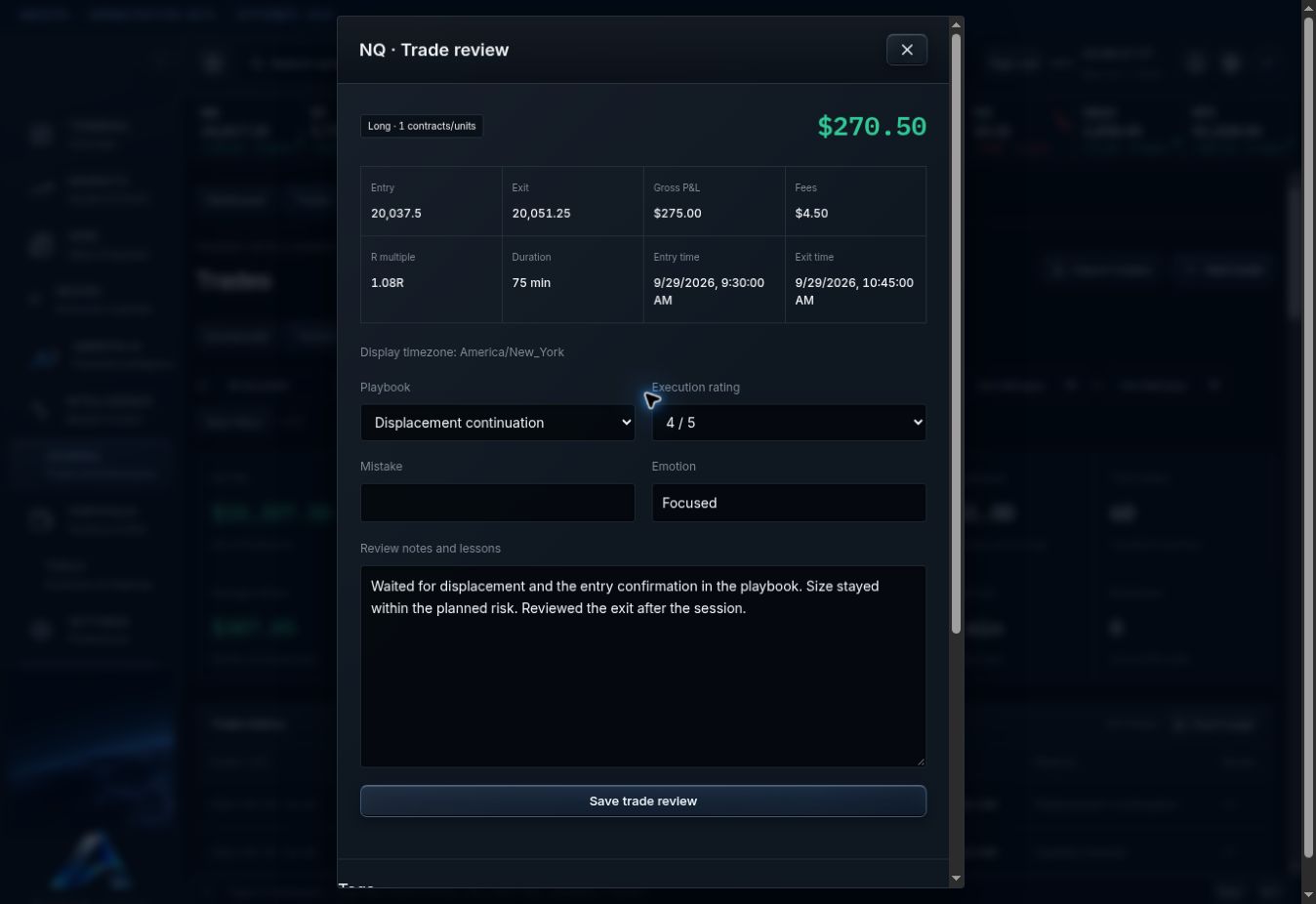
Swipe the image to inspect the details.
Be specific enough to check yourself.
“Bad trade” tells you very little. “Entered before the confirmation in my playbook” identifies a decision you can review. “Moved my stop after entry” is more useful than “felt emotional.”
A planned loss belongs in the record without automatically being called a mistake. Review the quality of the execution separately from the outcome. Add the timing and context you will need to understand the decision later.
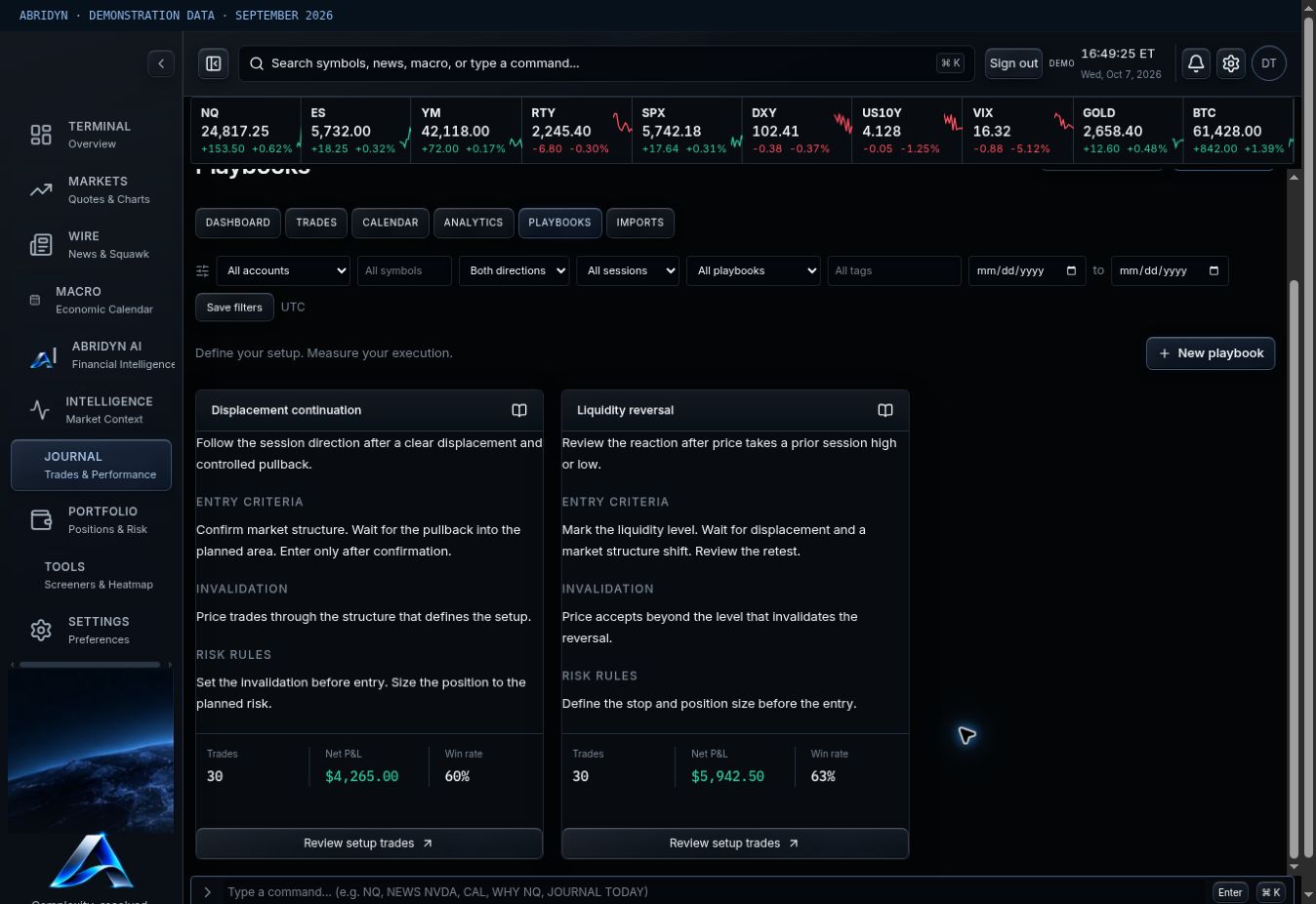
Swipe the image to inspect the details.
Keep the review manageable.
Check the day while you still remember it. Use a weekly review to compare the setups and behaviors that repeat. The point is a record you can use, not pages of commentary you never read again.
Use CSV upload for the execution facts and spend your review time on the decisions. Keep account credentials out of notes and store the original statements separately.
Sources and further reading.
Sources checked October 7, 2026. Abridyn examples follow the calculations used in the Journal.
For education and trade review. Examples use demonstration data.