
Start with the right trades.
Pick the account and period before you look at the result. Check the CSV upload against your broker export: symbols, quantities, entry and exit prices, timestamps and fees. Resolve missing trades and duplicates while the session is still fresh.
In Abridyn, check the mapping and preview before saving, then open the Journal history for the account and dates you want to review. It is much easier to trust the analysis when you have already checked the record.
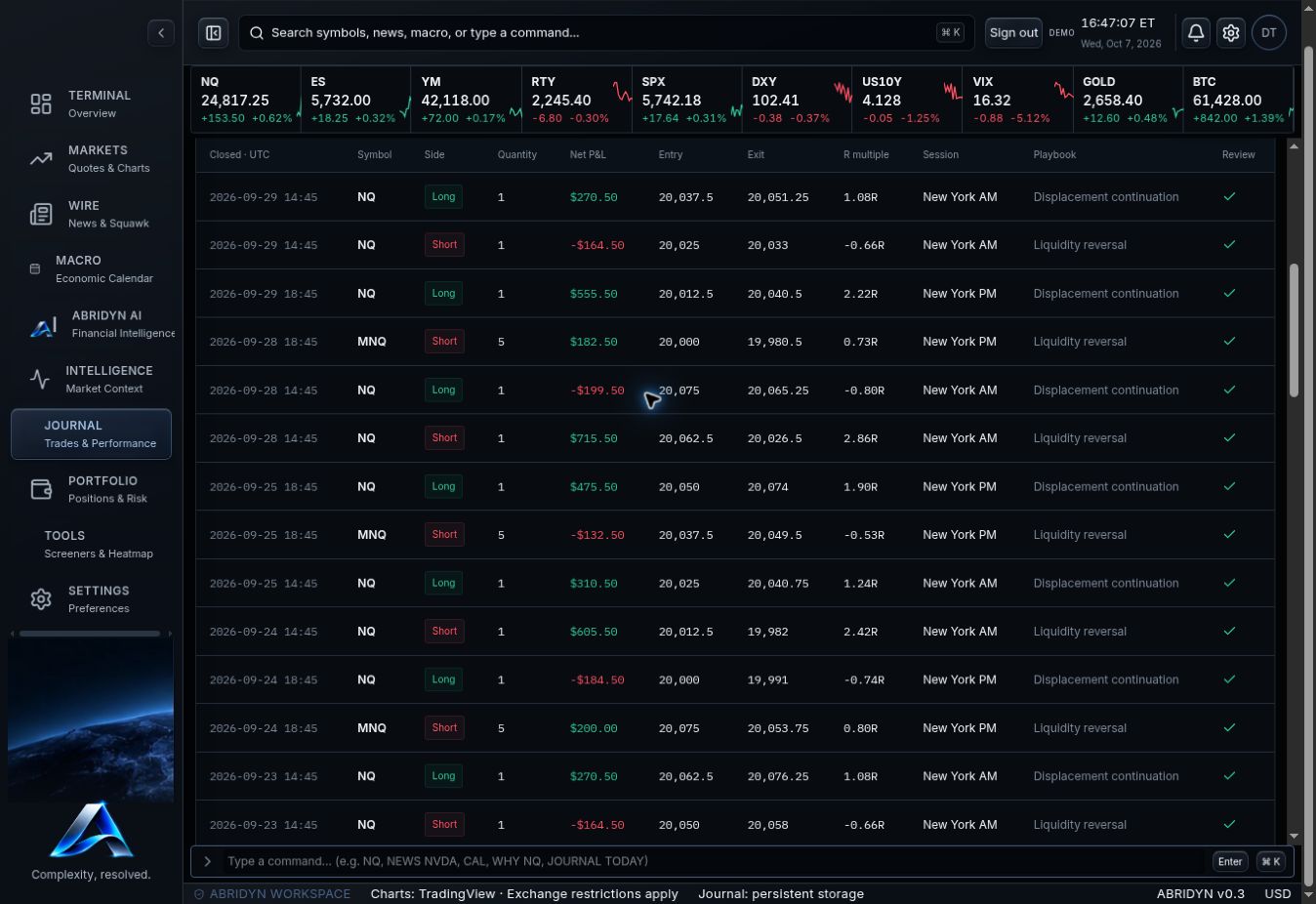
Swipe the image to inspect the details.
Look at how you got there.
Start with net P&L and trade count. Then read the daily results and cumulative realized-P&L curve. Did the gain build steadily, come from a few larger winners or recover from a difficult stretch? Each path calls for a different review.
Read win rate alongside average winner, average loser, expectancy and profit factor. A high win rate can still hide expensive losses. Closed-trade drawdown helps you review the declines in realized P&L; review your notes separately for risk experienced while a trade was open.
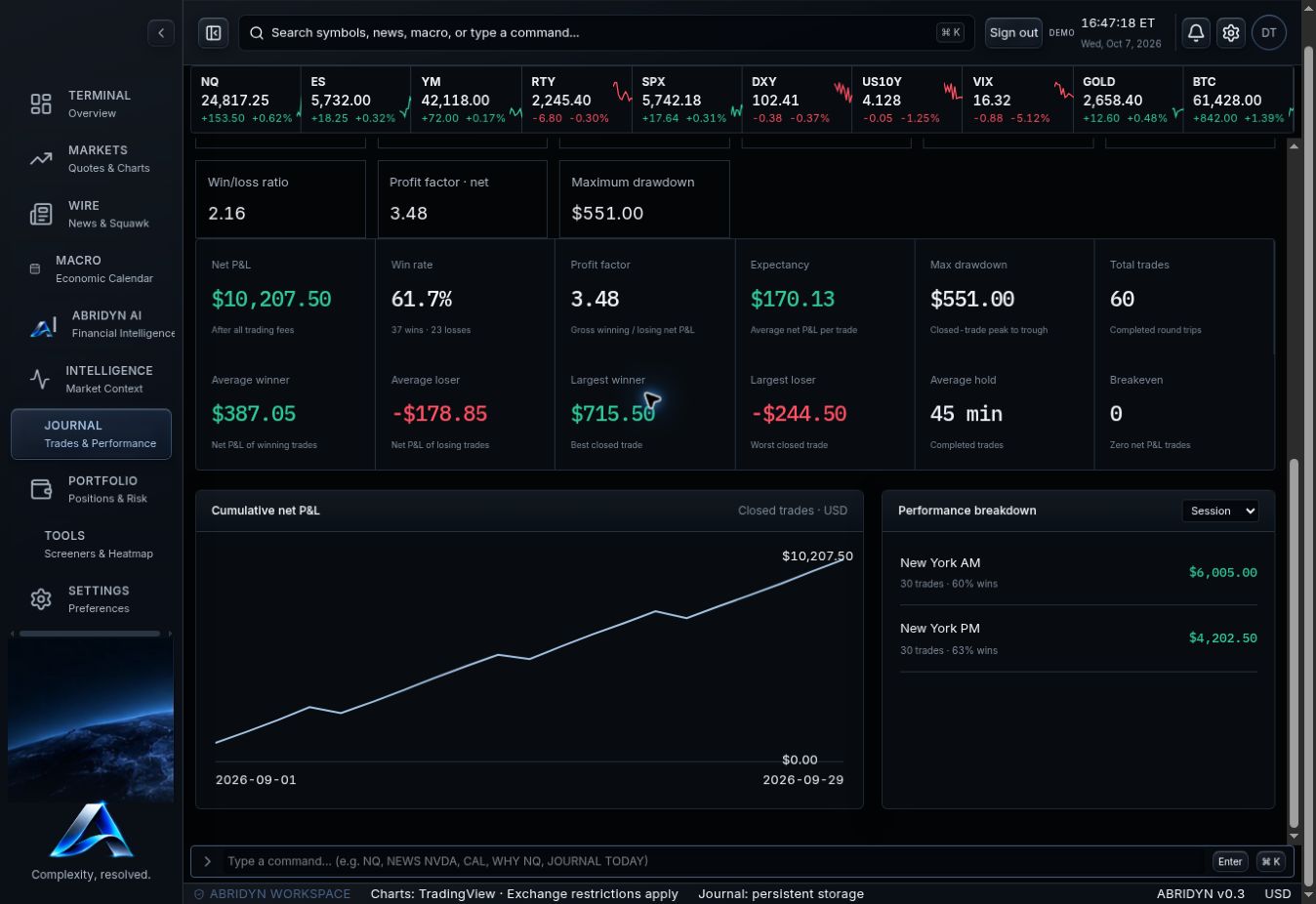
Swipe the image to inspect the details.
Ask one question at a time.
Choose a question you can check: “Am I giving back the morning in the afternoon?” or “Did I increase size after a loss?” Filter the relevant session, playbook or account and open the trades behind the result. Check the sample size before treating a pattern as established.
Abridyn groups daily completed results by UTC exit date. Keep that boundary in mind when matching the calendar to a broker statement that uses a different session day.
Leave the review with something specific.
Write down one rule to observe next. “Follow the entry confirmation in this playbook” is clearer than “be more disciplined.” Record the reason and what you will check at the next review.
Check whether you followed the rule and how the trades performed as two separate questions. A good decision can lose money. A poor decision can win. Your review needs enough detail to tell them apart.
Sources and further reading.
Sources checked October 7, 2026. Abridyn examples follow the calculations used in the Journal.
For education and trade review. Examples use demonstration data.