
Start with the market question.
ABRIDYN AI researches available News and Macro evidence. Use it to work through the reported catalysts and scheduled events around the session you trade. Select the instrument and horizon, then ask a question with a clear scope.
“Which macro events are scheduled this week?” is a useful starting point. “What do the retrieved headlines report about Nasdaq-related companies?” gives the research a more specific direction.
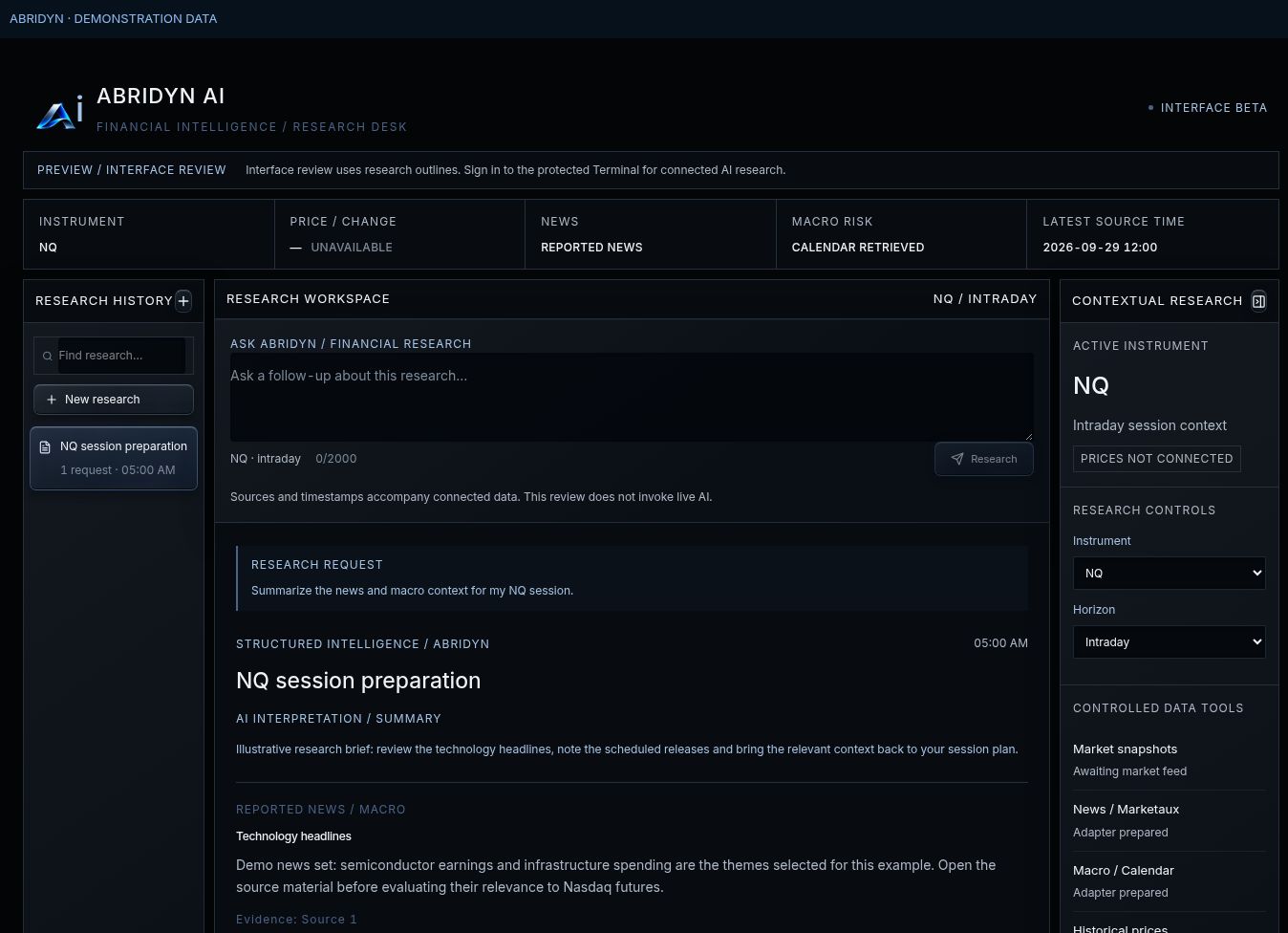
Swipe the image to inspect the details.
Read the answer with its evidence.
Review the summary, reported evidence and AI interpretation. Open Data Used / Sources and check the publisher and timestamps. Follow up if you need a narrower explanation of the retrieved material.
The source reports the information; the model interprets it. Keep those roles clear, especially when a brief discusses the possible relevance of a catalyst. AI can make mistakes, so check a claim before relying on it.
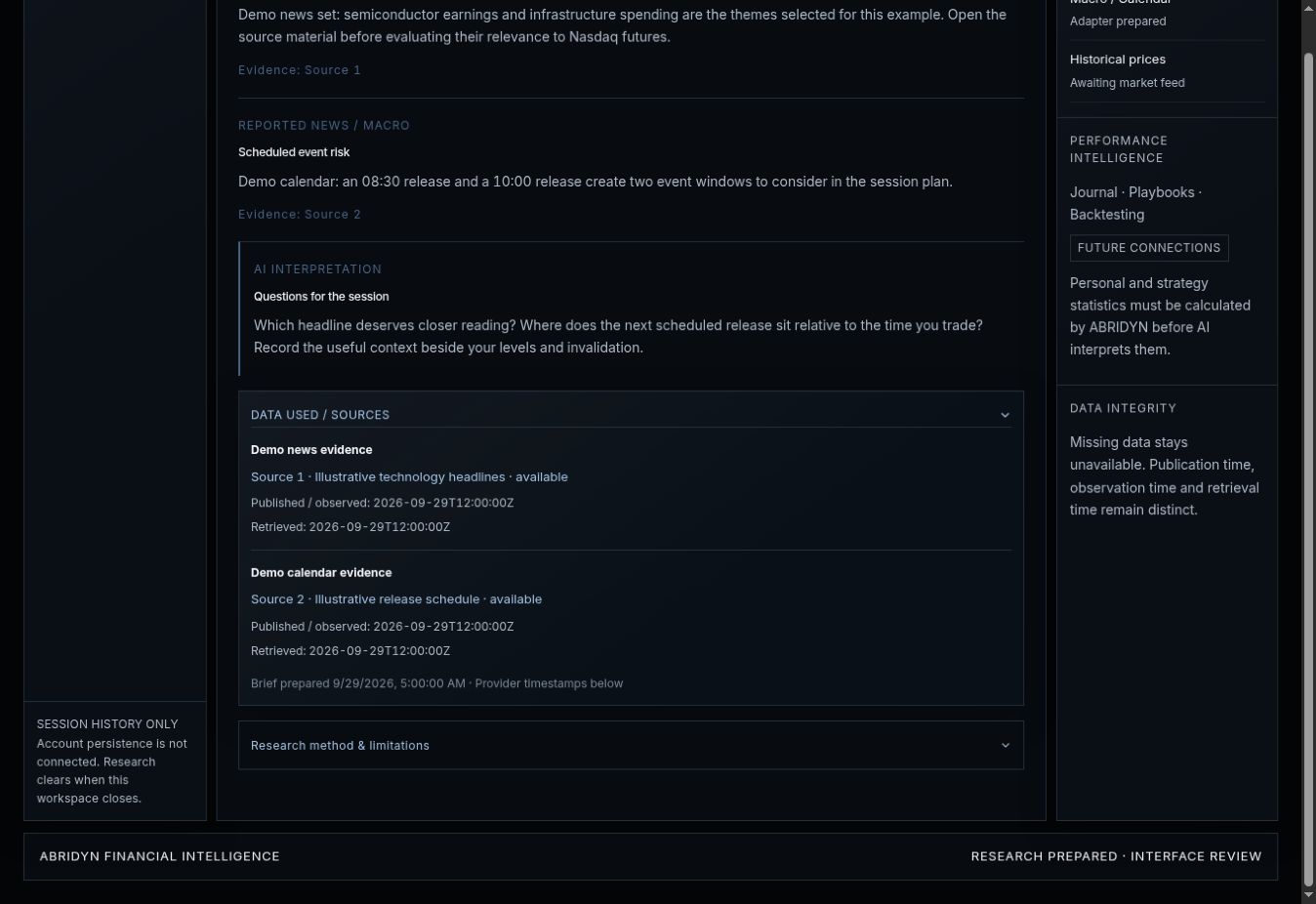
Swipe the image to inspect the details.
Bring useful context back to the plan.
Record the question, relevant source and date in your research notes. Mark the release or headline you want to watch, then use the chart and your own rules to prepare the session.
During review, compare that plan with your execution timestamps and notes. Use Journal analytics for the calculated trade results. ABRIDYN AI’s current research scope is News and Macro; personal Journal AI is a separate feature in development.
Make the workflow easy to repeat.
Use a morning brief to organize the first questions of the day. Use follow-ups for the instrument you trade. Afterward, keep the context that helps explain your preparation and discard the commentary you do not need.
Keep credentials and sensitive account information out of research prompts. Recheck time-sensitive information at the original source, and preserve the notes you want to revisit after the research session.
For education and trade review. Examples use demonstration data.